Midnight Pass Is Here to Stay. What That Changes at Sanderling's End of the Island
November 12, 2026
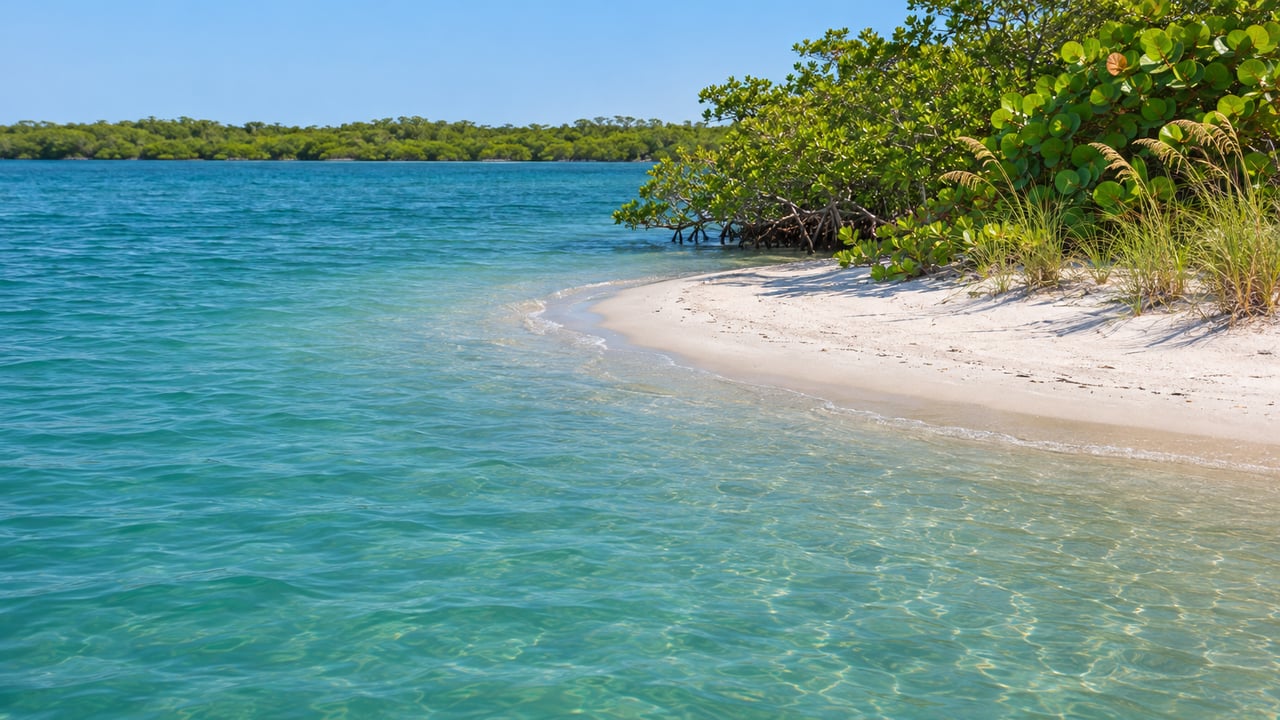
The sand at the bottom of Midnight Pass is different from the sand on most of Siesta Key. On the north end, the beach is the fine white quartz the island is known for. At the pass, the floor is mostly crushed shell, which engineers call shell hash. It is coarse enough to hold a steeper slope and to resist being pushed around by waves. That gravelly bottom is a big part of why the inlet a few miles south of the Sanderling Club gate is still open two years after the 2024 hurricanes cut through it. It is also why Sarasota County now has a plan to keep it open.
For owners at the south end of the island, that turns a lucky break into a fixture. It also means the pass now depends on forces this stretch of Siesta Key has dealt with before.
Midnight Pass has reopened before. Sarasota History Alive records that a 1921 hurricane closed the original Rocky River Pass, just south of today's Sanderling Club, and opened Midnight Pass about two and a half miles farther south. That joined the southern stretch of land to Siesta Key. The same account describes the island here as narrow: Gulf beach to the west, a two-mile lagoon in the middle, and a mangrove-lined Inland Waterway to the east. The club's original lots followed that shape. The west-side lots each had about 200 feet of Gulf frontage, and the rest faced Heron Lagoon.
The pass closed in 1983. It reopened after hurricanes Helene and Milton in September and October 2024, more than four decades later. The same kind of storm that set the south end's geography a century ago has rearranged it again.
On Sept. 22, Sarasota County commissioners heard from Mike Jenkins, a senior principal engineer with Geosyntec Consultants. Based on the monitoring data, he said, the pass is "dynamically stable." Siesta Sand reported his words to the commission: "So it is open and it is trending towards open based on everything we've seen to date." Commissioners then voted unanimously to approve five initiatives:
Your Observer described the goal as managing the inlet the way local governments already manage Longboat Pass, Big Pass and New Pass, instead of treating it as a temporary oddity of the tides. The markers and signs are planned. They are not in the water yet. The advisory signs are meant to warn boaters about manatees and about paddlers in kayaks and on boards. Permitting is the slow part. Jenkins said it could take several years, but there is now enough data to begin.
Commissioner Teresa Mast remembers the pass before it closed. "I don't want to see it close again for decades," she said, as quoted by Siesta Sand. "It was a fight."
Your Observer reported that Milton also opened a new inlet in Charlotte County, less than 30 miles away. It was named Milton Pass, and it has mostly filled in.
| Midnight Pass, Siesta Key | Milton Pass, Charlotte County | |
|---|---|---|
| Opened | Hurricane Milton, October 2024 | Hurricane Milton, October 2024 |
| Size reported | About 16 feet deep, about 1,400 square feet in cross-section, held for months | About 100 yards wide and 8 to 10 feet deep when it first opened |
| Status as of September 2026 | Open, trending toward staying open | Largely filled in |
Siesta Sand's account of the Sept. 22 presentation explains how the pass stays put. Survey crews have measured it nearly 90 times since it opened. Over that time the channel has settled into two favored positions about 60 feet apart. When waves dump sand into it, it usually returns to its earlier size within about two weeks. About two-thirds of the tidal flow runs through the eastern channel, and the rest heads north. At peak flow, enough water moves through to fill an Olympic-size swimming pool in roughly 25 seconds.
Anyone paddling the pass has seen that current at work.
Jenkins named two threats when Commissioner Mast asked. One is a powerful storm, which could close the inlet as fast as it opened. The other is beach renourishment on South Siesta Key. Sand moves naturally along this coast, which puts Midnight Pass within reach of the Turtle Beach nourishment project to the north. "We don't want to have a condition where we place sand on the beach and then we have an inlet closure," Jenkins told commissioners, according to Siesta Sand.
Commissioner Joe Neunder asked how the finer sand usually used for renourishment would mix with the shell hash that keeps the inlet steady. Jenkins said that question is part of ongoing technical discussions. The beach north of the pass and the inlet itself now have to be planned together.
The county also has a fallback. An emergency response plan, prepared with the Florida Department of Environmental Protection, would let crews restore the pass's documented shape if it closes. Jenkins estimated that would mean removing about 25,000 cubic yards of sediment, mostly with land-based equipment, and that a response could take "weeks to months." That is a small job by local standards. Your Observer noted that more than ten times that amount was recently dredged from New Pass between Lido and Longboat keys. Any dredging would aim at making passage safer, not at enlarging the inlet. Jenkins warned that digging out too much could undo the stability the monitoring has documented.
For neighbors who live just up Midnight Pass Road, the pass is close on a map, but the only practical way there is by water. Sarasota County lists Palmer Point Beach Park, 9399 Blind Pass Road, as watercraft access only, with no parking. Its facility page says pedestrian access is unavailable because Hurricane Milton badly eroded Turtle Beach.
That makes Turtle Beach Park, at 8918 Midnight Pass Road, the usual starting point. It has motorized and non-motorized boat ramps and a canoe and kayak launch, and it is open 6 a.m. to 10 p.m. The free Route 77 Siesta Islander trolley stops at Turtle Beach Park and the campground, which helps when guests want to meet you at the launch without parking a car.
Two local outfitters run trips to the pass:
If you'd rather paddle out on your own, the Florida Fish and Wildlife Conservation Commission keeps its rules for kayaks, canoes and paddleboards online. The page covers which craft count as vessels, with exceptions for paddleboards in swimming, surfing or bathing areas, along with equipment requirements and use of the Intracoastal channel. We share it as general information, not legal advice. Please check FWC's current rules for your own craft before you launch.
The pass has gotten busy. In June, the Sarasota Bay Estuary Program held a scientific workshop on Midnight Pass and Little Sarasota Bay, with about 60 participants from 14 organizations. The Herald-Tribune reported that the top data gap to come out of it was how the surge in recreation and boat traffic is affecting seagrass and wildlife. "Many boaters already know, love, and help steward this area," SBEP executive director Ryan Gandy said in that report. "Reaching visitors and less-familiar users will be an important next step for education and outreach." The program's bay-friendly boating guidance is at sarasotabay.org.
For local operators, the pass has opened up new places to go. Charter captain Matt Fueyo told WWSB that "there are so many more shells and more activities that we've been able to do down in this region." He also said the entry keeps moving as storms shift the sand. Scott Lewis, who founded Restore Midnight Pass Now in 2013, told the station he was glad to see forward movement and wants maintenance work to benefit the bay as well as boaters. On water quality, Jenkins said the added tidal exchange has improved flushing north and south of the pass. He also noted that it moves nutrients around without reducing them, and that more data is needed to measure the environmental benefits.
The county keeps a Midnight Pass project page with links to its weekly inlet surveys. The latest one posted is dated Oct. 27, 2026. If you fish, Capt. Rick Grassett's November report in Siesta Sand says a few snook may stay around the passes and surf this month. Redfish and big trout move into shallow water, and pompano may show up with trout on the Sarasota Bay grass flats.
At the Sanderling Club, a cut at the south end of the island has always been part of the neighborhood's story. If you're thinking about what the south end's waterways mean for a home you own or one you're considering, Michelle Shiver and our team would be glad to talk it through. Schedule a private consultation.
Stay up to date on the latest real estate trends.

Real Estate, Gulf Coast of Florida
How discreet buyer representation, nondisclosure agreements and early legal planning can help protect your privacy.
We’d love to hear from you! Whether you’re buying, selling, or just exploring your options, we're here to provide answers, insights, and the support you need. Contact us and start planning your next move.

1549 Ringling Blvd Ste 600 Sarasota, FL 34236